What does Morehead City’s New UDO mean for buyers and developers?
Morehead City’s New UDO is the city's rewrite of its development rules, branded Advance Morehead City, aimed at an easier-to-use ordinance and clearer, more efficient review processes. For buyers and developers, the effect shows up in three places: which uses are allowed on a parcel, which development standards apply, and which approvals you need before you build or subdivide. Get the adopted text and effective date from the city before you rely on any specific rule.
Key Takeaways
- Advance Morehead City is the name of the UDO rewrite, and the city says the goal is an easier-to-use ordinance with clearer, more efficient development review.
- A unified development ordinance combines zoning, subdivision, and other development rules in one document, but under G.S. 160D-103, combining them does not expand or shrink the city's underlying legal authority.
- A listing that says "buildable," "commercial," or "mixed use" is not zoning confirmation, so get the parcel's zoning and permitted uses confirmed in writing.
- After subdivision regulations take effect, you generally can't file or record a plat until the designated body approves it and the approval appears on the face of the plat.
- A Morehead City mailing address does not prove a parcel is inside the city's zoning jurisdiction, so confirm that before you evaluate anything else.
What is Morehead City’s New UDO, and how does state law fit in?
It's the city's effort to rewrite and modernize the ordinance that governs how land can be used and developed inside city limits. The city described the project, Advance Morehead City, in a January 2025 public announcement.
Here's where I stay careful with my clients. An announced rewrite is not the same as an adopted, effective ordinance. The announcement tells you the project exists. It doesn't give you the adoption date, the final text, or the transition rules. Until you have those from the city, treat any claim about new setbacks, parking standards, height limits, or density as unverified. That includes claims in a listing description, a social post, or a neighbor's secondhand story.
Why does a UDO exist?
North Carolina law lets a local government combine its zoning, subdivision, and other development regulations into one document. That's what G.S. 160D-103 allows. The same statute says combining them doesn't change the city's underlying legal authority. In plain terms, a rewrite can reorganize and clarify the rules, but the city still works inside the framework state law sets in Chapter 160D.
What counts as a development approval?
A development approval is a written administrative or quasi-judicial approval you need before you can begin development or a specific activity. G.S. 160D-102 lists examples such as zoning permits, site-plan approvals, special-use permits, variances, and certificates of appropriateness.
This matters because the approval procedure can affect your project as much as the permitted use does. Two parcels can both allow the use you want, and one can still take far longer to approve depending on who decides and what materials the city requires.
How could Morehead City’s New UDO affect vacant lots, redevelopment sites, and home purchases?
It could affect all three, but the effect depends on the specific parcel, and I won't promise a price bump from any zoning change. Use, standards, and procedure each work differently depending on what you're buying. I walk my clients through all three before we write an offer.
What should I know about vacant lots?
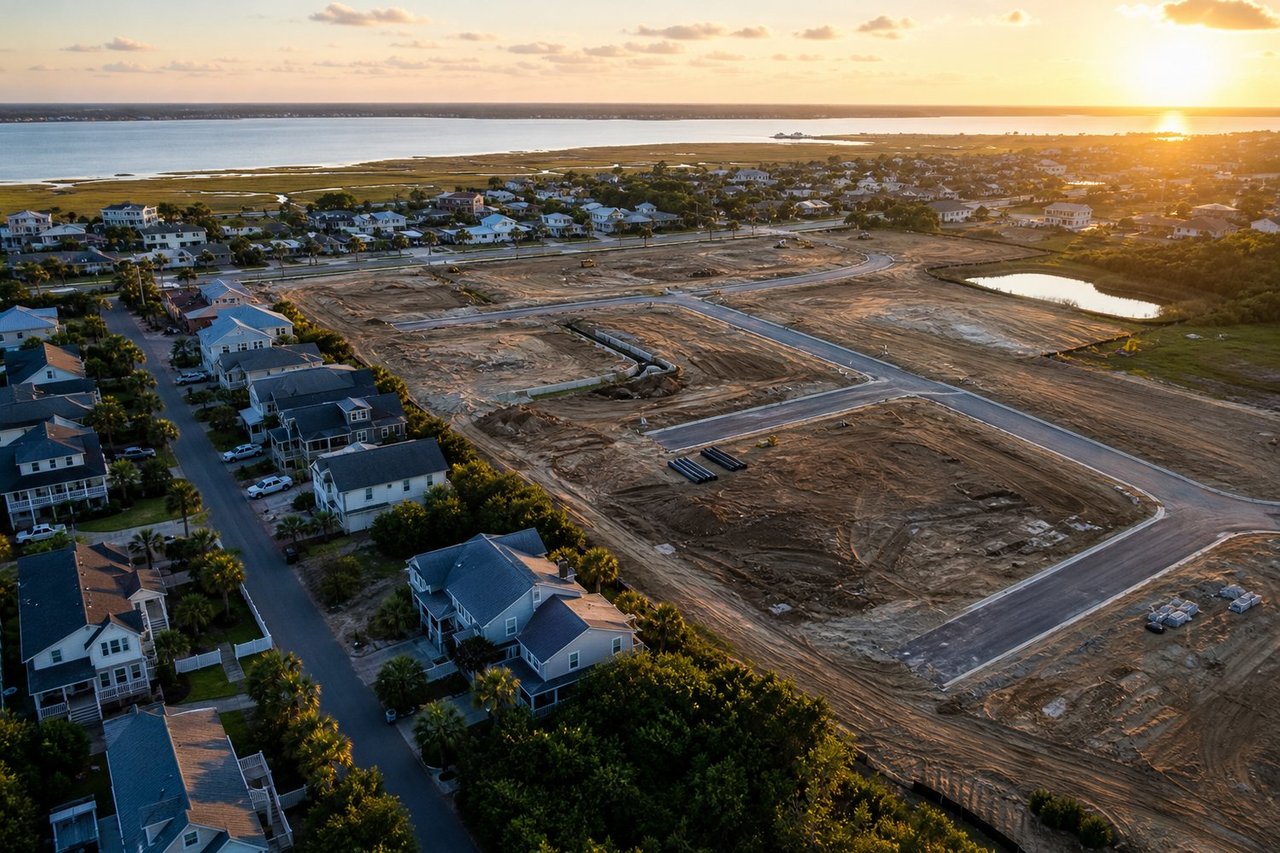
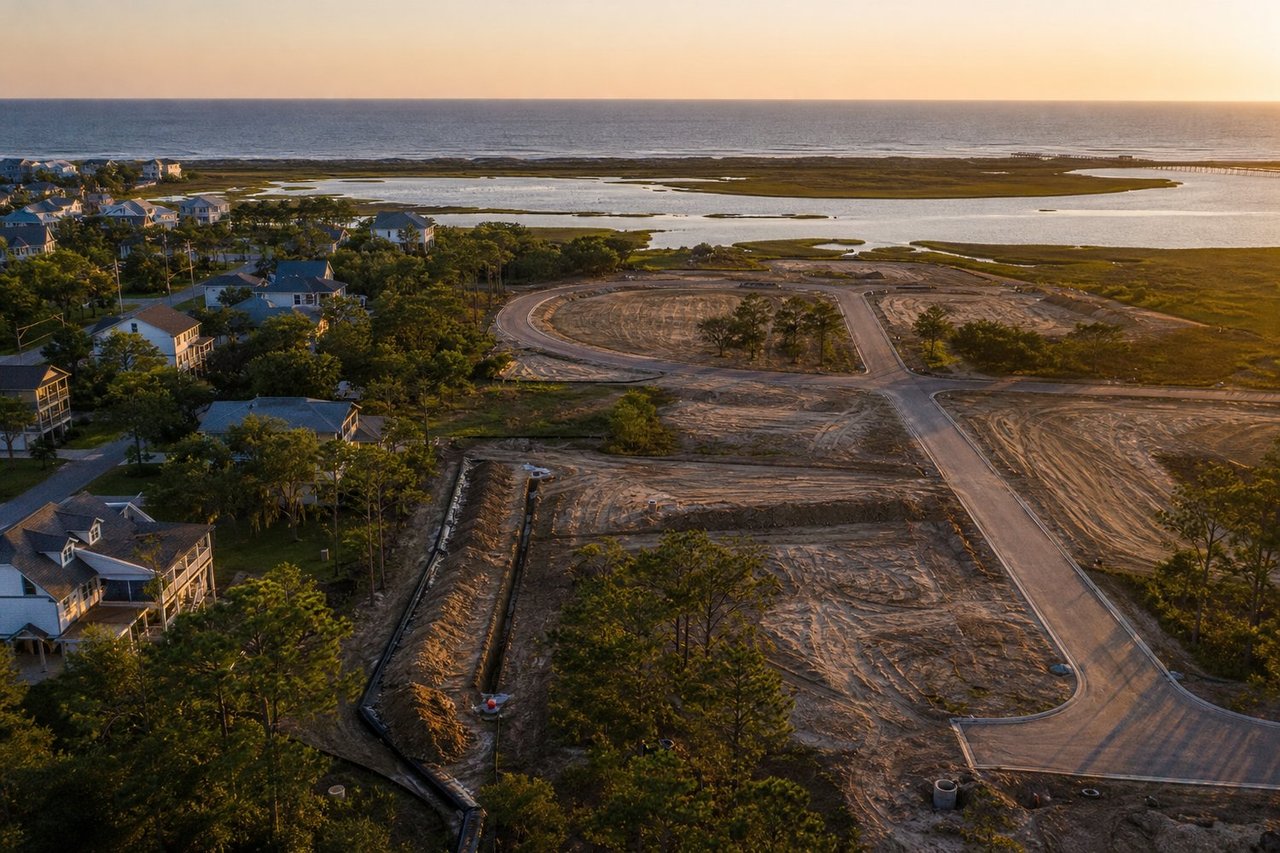
A vacant lot is only as valuable as what you're allowed to build on it. Base zoning is just the start. Look at the permitted-use table, then the dimensional standards: setbacks, lot size, lot width, height, parking, landscaping, and access. Then check for overlay districts, flood-hazard rules, waterfront or environmental limits, and any historic-preservation requirements that apply to that specific parcel.
If you plan to split a lot, the subdivision rules matter too. State law lets cities review sketch plans, preliminary plats, and final plats, and approval or denial has to rest on standards stated in the ordinance. The city's planning page says that once an application is technically complete, a UDO amendment or subdivision request may go to the Planning Board and City Council. That page doesn't lay out the full timeline under the rewrite, so ask staff what to expect for your case.
What should I know about redevelopment sites?
Permission to use a site a certain way is not the same as the ability to build it. A site can allow the use you want and still be hard to develop because of setbacks, parking, access, stormwater, lot coverage, floodplain constraints, utility capacity, or nonconforming-site rules.
If you're looking at an older commercial or multifamily property, don't assume a looser use table automatically raises the value. It might. It might also run into physical limits on the lot. This is where I bring in my own experience as an investor: I run the site constraints before I run the pro forma. If you're comparing sites, my post on how the UDO rewrite affects real estate adds more context.
What should I know about buying a home?
If you're buying an existing home, the UDO matters most when you plan to add on, rebuild, add a detached structure, or change how the property is used. Ask whether the home conforms to current standards. The rules for nonconforming properties live in the ordinance, so I can't tell you how the rewrite treats them without the adopted text. Get the answer from the city in writing, not from a listing.
If you're thinking about a build, my guide on new construction trends on the Crystal Coast pairs well with this one.
What should I check before I buy or build in Morehead City?
Start with jurisdiction, then work through use, standards, overlays, approvals, and which version of the rules applies to your application. Here's the order I use:
Step | What you're confirming | Why it matters |
|---|---|---|
1. Jurisdiction | Whether the parcel is inside Morehead City, elsewhere in Carteret County, or under another local government | A city mailing address doesn't prove city zoning applies |
2. Zoning district | The district assigned to the parcel | It controls which use table and standards apply |
3. Permitted use | Whether your use is by right, needs special or conditional approval, or is prohibited | A "yes" with strings attached changes your timeline and risk |
4. Dimensional standards | Setbacks, lot size, width, height, parking, landscaping, access | These decide how much you can actually build |
5. Overlays and constraints | Flood-hazard, waterfront, environmental, and historic-preservation rules | Each can add requirements on top of base zoning |
6. Required approvals | Subdivision, site-plan, stormwater, driveway, utility, or other approvals | Each is a checkpoint that can add time |
7. Which rules apply | Whether the ordinance in effect on your application date, or vested-rights or transition provisions, governs | Timing can decide which standards you must meet |
Who decides, and can I appeal?
For any approval, ask five things: which body decides, whether the decision is administrative or quasi-judicial, what technical materials are required, whether public notice or a hearing applies, and whether an appeal or vested-rights protection is available. The city's FAQ says the Planning Board and City Council review ordinance amendments. That's a general description of the amendment path, not the final procedure under the rewrite, so confirm the specifics for your project.
Why does the recording step matter?
If you're dividing land, the plat is the finish line. After subdivision regulations are in effect, a plat generally can't be filed or recorded until the designated body approves it, with approval entered on the face of the plat. A deal that depends on a lot split should not close on hope. Your real estate attorney should be part of that timeline from the start.
How do I use this when I'm comparing properties?
Your answer depends on the parcel, your plans, and your application timeline. That's where a local market analysis and a feasibility conversation come in. If you're weighing more than one site, I'll help you line up the questions to put to the city before you commit. If you're investing, my post on 1031 exchanges and investment properties in Morehead City covers how timing pressure can shape these decisions.
Before you rely on Morehead City’s New UDO for any deal, get three things in hand: the adopted ordinance text, its effective date, and a written zoning confirmation for your parcel. A listing description can't replace those.
Curious how I work with clients? You can read my reviews on Google, Zillow, and Realtor.com.
FAQ
What exactly changed in Morehead City’s new UDO?
The city has described the rewrite, Advance Morehead City, as aiming for an easier-to-use ordinance and clearer, more efficient review processes. I can't give you a change-by-change list of permitted uses or standards without the adopted text. Ask the city for the adopted ordinance and any comparison it has published, and I'll help you read it against your property.
Has Morehead City adopted the rewritten UDO, and when does it take effect?
Ask the city for the adoption ordinance and its effective date. The city announced the project in January 2025, but an announcement doesn't establish adoption or an effective date. Don't rely on a specific new rule until you have the adoption document in hand.
Can I still build on a vacant lot under the new Morehead City zoning rules?
Possibly, but you have to confirm it parcel by parcel. Check the zoning district, the permitted-use table, dimensional standards, overlays, and required approvals. Also ask whether the ordinance in effect on your application date, or vested-rights or transition provisions, will govern. Get the answer in writing before you close.
Does the city or the county control zoning for a property near Morehead City?
It depends on where the parcel sits. A Morehead City mailing address doesn't prove the property is inside the city's zoning jurisdiction, and the rules may differ if it's elsewhere in Carteret County or under another local government. Confirm jurisdiction first, because every other answer depends on it.
How could the new UDO affect the value or redevelopment potential of a commercial site?
It could help, hurt, or change little, depending on the site. A use may be allowed, but setbacks, parking, access, stormwater, lot coverage, floodplain limits, or utility capacity may still hold the project back. I won't call a zoning change an automatic value gain without checking those constraints on the specific site.
The core takeaway is simple: get the adopted rules, confirm jurisdiction, and verify the use, standards, and approval path for your parcel in writing before you commit. I help buyers, investors, and developers across the Crystal Coast line up those questions and work them through with the city and your real estate attorney.
Send me an email and tell me about the lot or site you're considering. Or search homes and land to see what's available. For related context, read my breakdown of Morehead City's FY26 growth plan and your home value.
Equal Housing Opportunity. Vicki Lemmond, NC License, REAL Broker LLC, regulated by the NC Real Estate Commission. This article is general information, not legal, tax, or financial advice. Confirm your own situation with your real estate attorney, tax advisor, or lender.