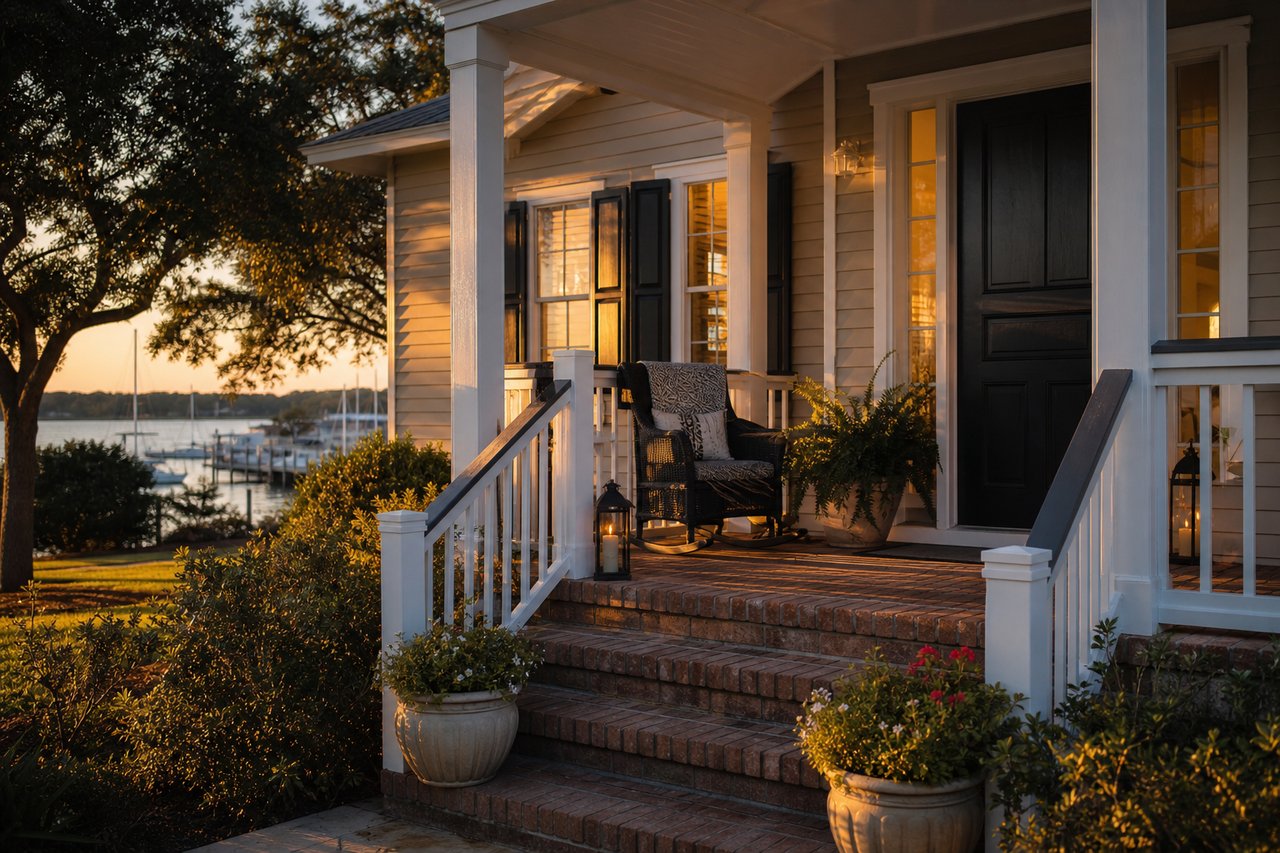
Buyers eyeing a house in downtown New Bern's historic district almost always ask the same question first: how much will the Historic Preservation Commission slow me down? It's a reasonable fear. Nine appointed commissioners, a review board, an ordinance with sections numbered like a tax code. It sounds like the kind of bureaucracy that could stall a closing for months.
It won't. The Certificate of Appropriateness process that governs New Bern's historic districts only touches exterior changes, and most buyers never trigger it before closing at all. The actual timeline risk in this market sits somewhere buyers rarely think to look: the flood insurance clock, and whether your financing structure starts it or skips it entirely.
What the Certificate of Appropriateness Actually Regulates
New Bern has two locally designated historic districts, Downtown and Riverside, both overseen by the Historic Preservation Commission. The commission meets twice a month at City Hall on Pollock Street: a design review session on the first Wednesday and a regular meeting on the third Wednesday. Its job, according to the city's own guidance, is to review and approve exterior changes to contributing structures and prevent what the ordinance calls demolition by neglect.
Here's the part that matters for a buyer: the rules apply to what you do to the outside of the house after you own it. Painting a wall inside, replacing a water heater, refinishing floors, none of that requires a hearing. Even exterior work gets triaged. Minor items, in-kind repairs and small changes, can be approved directly by city staff. Only major work, new construction, demolition, or significant exterior alteration, needs a full commission hearing.
State law gives the commission up to 180 days to rule on a completed application, but the application instructions note that most applications are decided at the very first meeting. If you're buying a contributing home to live in as-is, you can close on a Tuesday and never think about a Certificate of Appropriateness again. The process only activates when you decide to change something visible from the street.
What Commission Review Actually Looks Like in Practice
For a sense of what does require a hearing, look at 226 East Front Street. In July 2026, the commission held a public hearing to consider amending an already-approved Certificate of Appropriateness for a three-story project near the Neuse River: a restaurant on the ground floor with multifamily units above. The site received a special use permit from the Board of Adjustment back in March 2025, and the property owner returned to the commission to adjust the approved plan.
That's what triggers a real hearing: a developer reshaping a 0.29-acre parcel into new construction. It is not what happens when a family buys a 1920s bungalow off George Street and moves in. If your plans are that specific and that visible, budget time for the process. If they're not, the commission is background noise, not a closing contingency.
Where the Real Clock Starts: Flood Insurance
New Bern sits at the confluence of the Neuse and Trent rivers, and much of the city, according to its own floodplain development page, falls inside a Special Flood Hazard Area. The National Flood Insurance Program caps building coverage at $250,000 for a single-family home and $100,000 for contents. Standard homeowner's policies, as Craven County's own flood insurance page states plainly, usually don't cover flood losses at all. That part is well known.
What's less understood is the waiting period, and it depends entirely on how you're buying. A new NFIP policy normally takes 30 days to become effective. But if the policy purchase is tied to making, increasing, extending, or renewing a loan, that waiting period disappears. There's also a narrower exception: if you buy within one year of a revised Flood Insurance Rate Map for the area, the wait drops to a single day.
In practice, that means two buyers closing on the same street can end up in very different positions:
| Buyer scenario | Flood insurance timeline |
|---|---|
| Financed purchase, policy bound through the lender at closing | No waiting period, coverage active at closing |
| Cash purchase, policy shopped for after closing | Standard 30-day wait before coverage begins |
| Either scenario, closing within one year of a revised flood map | 1-day waiting period |
A cash buyer who waits even a week after closing to call an insurance agent could be uninsured against flood loss for a full month during hurricane season. A financed buyer who binds the policy as part of the loan process typically isn't. If you're paying cash for a historic district property here, this is the one step that should happen before you get the keys, not after.
Why "Home Was Raised" Shows Up So Often in Listings
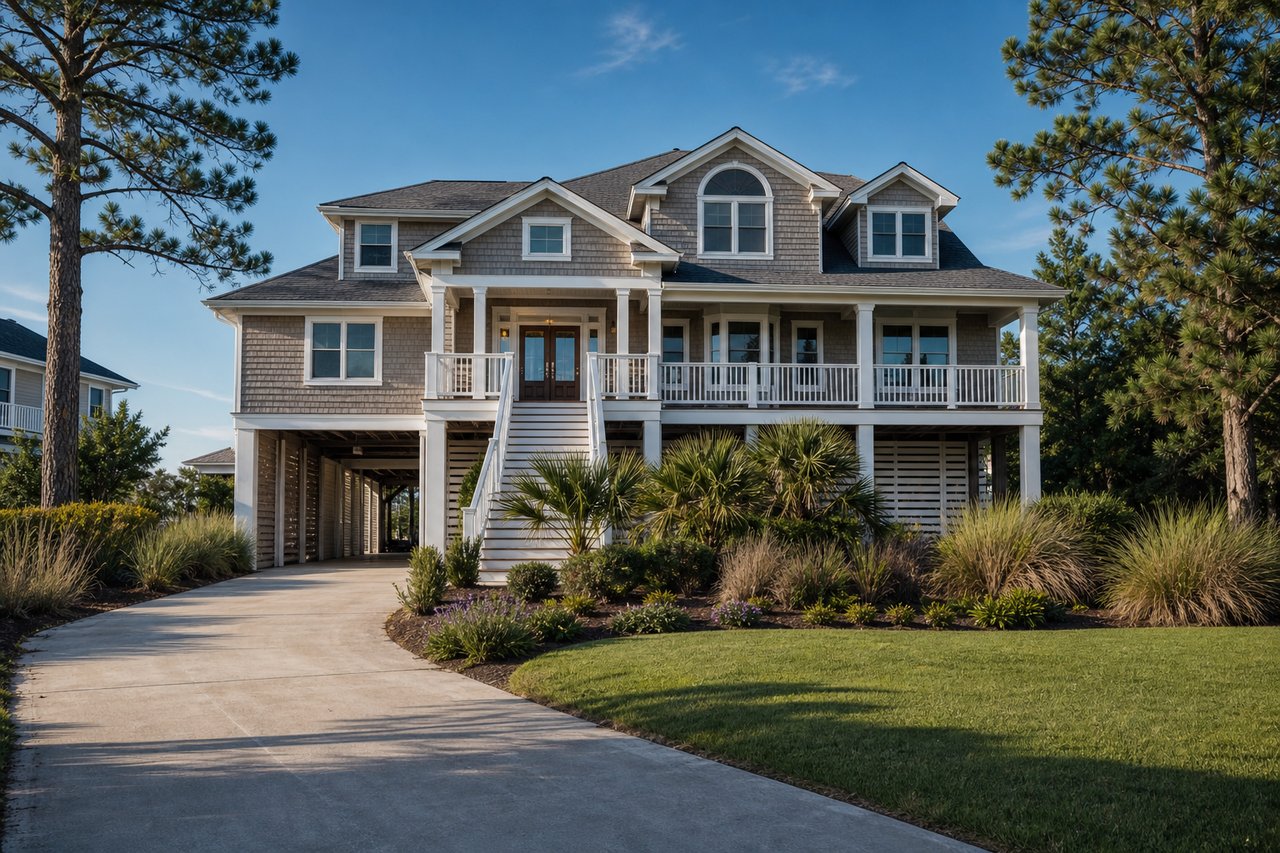
Search current historic district listings in New Bern and you'll see a recurring phrase: home raised, systems rebuilt, following Florence. That's not a design flourish. Hurricane Florence hit New Bern in 2018 with a storm surge measured at 10.41 feet and rainfall totals reaching 16 inches, according to the city's own flood records. Homes across the historic districts were rebuilt with new HVAC, electrical, and plumbing systems, and in some cases physically elevated to get living space above base flood elevation.
That detail now affects your insurance quote directly. FEMA's Risk Rating 2.0 system prices flood coverage based on a property's elevation relative to base flood elevation, along with distance from flood sources and prior claims history. A home that was raised after Florence isn't just structurally different from one that wasn't. It's priced differently by every insurer using the current rating model. When you're comparing two historic homes at similar list prices, ask when the elevation and systems work happened. It changes your real annual carrying cost more than the sale price does.
The Numbers That Don't Match the Citywide Headline
New Bern's overall market has been taking longer to close this year. Over the three months ending in May 2026, homes sold for a median price of $334,000, up 3.6 percent from the same period a year earlier, but the median time on market stretched to 63 days, compared to 40 days the year before. Prices held. Speed didn't.
Historic district inventory doesn't match that pattern. Current listings tagged to New Bern's historic district carry a median list price between $348,000 and $360,000, a real premium over the citywide median, and they're moving in roughly 57 to 76 days, in the same range as the city overall despite carrying more perceived friction: preservation review, older systems, flood zone exposure. If preservation rules and flood insurance hassle were scaring off buyers, this is the segment where it would show up first, as longer time on market relative to everything else in the city. It isn't showing up.
That's worth sitting with before you write an offer. Whatever is stretching New Bern's overall days-on-market number this year, thinner buyer pools outside downtown, financing friction on newer construction, general seasonal drift, it isn't specific to historic district homes. Buyers who rule out the historic district because they assume it's slower or more complicated to close are working from an assumption the current numbers don't support.
What This Means for Your Offer This Month
Before you write an offer on a historic district property in New Bern, run through this short list:
- Check the parcel's flood zone status directly through the North Carolina Flood Risk Information System, referenced on the city's floodplain page, rather than relying on a listing description.
- Ask the seller or listing agent whether the home was raised or had systems rebuilt after 2018, and get the year. It affects your Risk Rating 2.0 quote.
- If you're financing, confirm your lender is binding flood coverage as part of the closing package so you avoid the 30-day gap entirely.
- If you're paying cash, call a flood insurance agent before closing, not after, so coverage starts the same day you take title.
- If you already know you want to change the exterior, whether that's a fence, a porch, or new siding, call the city's HPC Administrator before you close to find out if it qualifies as minor work city staff can approve, or major work that needs a full hearing. That's a renovation timeline question, not a closing timeline question.
A Few Questions Buyers Ask Us Directly
Does buying a historic home in New Bern require Historic Preservation Commission approval before I can close? No. Certificate of Appropriateness review only applies to exterior changes made after you own the property. Buying an existing home as-is doesn't require any HPC action.
How long does a Certificate of Appropriateness actually take once I file one? State law allows the commission up to 180 days for a completed application, but the city's own instructions note that most applications are decided at the first meeting they're presented at.
Is flood insurance required for homes in New Bern's historic districts? If your home sits in a Special Flood Hazard Area and you have a federally backed mortgage, your lender will require it. Given how much of New Bern falls into that zone, most historic district buyers should assume it applies until they confirm otherwise.
If you're weighing a specific property in New Bern's historic district and want someone who already knows which flood map revisions apply to your block or whether a listing's "raised in 2019" note is going to help or hurt your insurance quote, Buying NC can walk through the property with you before you write the offer. See if you qualify for NC Home Advantage while you're at it: it's one more lever worth checking before you finalize your financing structure.