Thinking about buying a second home or rental on the Crystal Coast? Carteret County can be a compelling option, but it is not a market where you want to rely on broad averages or beach-town assumptions. If you are comparing locations, budgeting for ownership, or hoping to offset costs with rental income, you need a clear picture of pricing, seasonality, flood risk, and local rules before you buy. Let’s dive in.
Why Carteret County draws second-home buyers
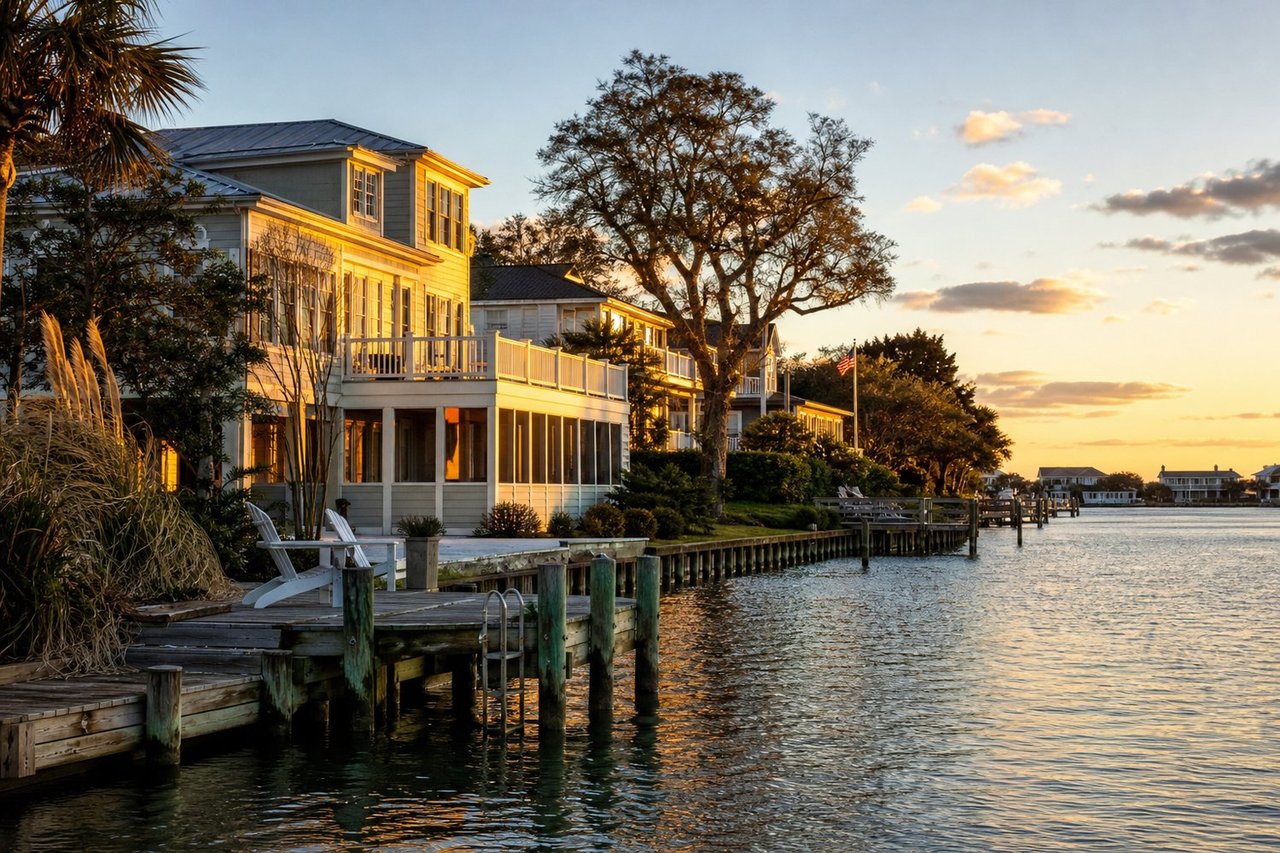
Carteret County benefits from its position along North Carolina’s Crystal Coast, an 85-mile stretch that includes Bogue Banks and several well-known coastal communities. According to official Crystal Coast tourism guidance, summer is the peak travel season, while spring and fall also bring steady appeal thanks to milder weather, warm water, and seasonal events.
That seasonal draw matters if you want a home you can enjoy personally while also exploring rental potential. Annual events like the Big Rock Blue Marlin Tournament, the North Carolina Seafood Festival, the Beaufort Music Festival, and the Emerald Isle St. Patrick’s Festival help support visitor activity beyond just the core summer months, which can strengthen demand in the right location.
The county also has meaningful tourism volume. VisitNC reports that Carteret County generated $743.38 million in visitor spending in 2024, along with $29.57 million in local taxes. That places it in a solid position among North Carolina coastal destinations and helps explain why second homes and vacation rentals remain part of the local housing conversation.
What home prices look like
One of the biggest mistakes buyers make in Carteret County is assuming every town fits the same price band. Countywide numbers are helpful as a starting point, but they do not tell the full story if you are choosing between a condo near the beach, a cottage in town, or a home farther inland.
Realtor.com’s county overview shows a median home price of $558,500 in Carteret County and describes the area as a buyer’s market in late 2025. The same source notes homes selling at about 97% of list price and taking around 102 days on market, which may give you more room to evaluate options than in faster-moving coastal markets.
Local price points vary quite a bit. Recent snapshots show:
- Atlantic Beach around $450,000 citywide
- Atlantic Beach ZIP 28512 around $549,000
- Beaufort around $539,900
- Morehead City around $570,000
- Emerald Isle ZIP 28594 around $994,200
These figures, from Realtor.com’s local market data, show just how wide the range can be inside one county. If you are building a budget, that means your target town matters almost as much as your target property type.
Why rental math needs a closer look
If your plan includes income from the property, you need to separate the idea of “strong vacation demand” from the reality of monthly carrying costs. A beautiful location does not automatically equal strong year-round cash flow.
The same Realtor.com local snapshot shows long-term rents around $2,000 per month in Atlantic Beach, $1,950 in Beaufort, $1,925 in Morehead City, and $2,800 in Emerald Isle ZIP 28594. These are not short-term rental nightly rates, but they do show that long-term rents may not fully support higher purchase prices on their own.
For many buyers, that means the property needs to work as a mix of personal use, long-term value, and possible vacation-rental income. It is usually smarter to underwrite conservatively and treat rental income as something you verify carefully, not something you assume.
Seasonality affects income planning
Carteret County is a tourism-driven market, and tourism here is strongly seasonal. Crystal Coast guidance identifies June through August as peak season, while winter is the quietest time of year.
That pattern can shape your ownership strategy in a few ways:
- Peak-season weeks may carry most of your annual rental demand
- Shoulder seasons can still be useful, especially around festivals and events
- Winter may bring slower booking activity depending on location and property type
- Vacancy planning matters more here than in a year-round urban rental market
If you are buying mainly for personal use, seasonality may be less of a concern. If you are counting on income to offset costs, it becomes one of the first things to model.
Flood risk is a major buying factor
In Carteret County, flood planning is not a side issue. It is one of the central parts of due diligence.
According to Carteret County flood information, wind-driven storm surge from hurricanes, tropical storms, and nor’easters is the county’s dominant flooding source. The county says about 33% of the population and 47% of the land area are in a Special Flood Hazard Area.
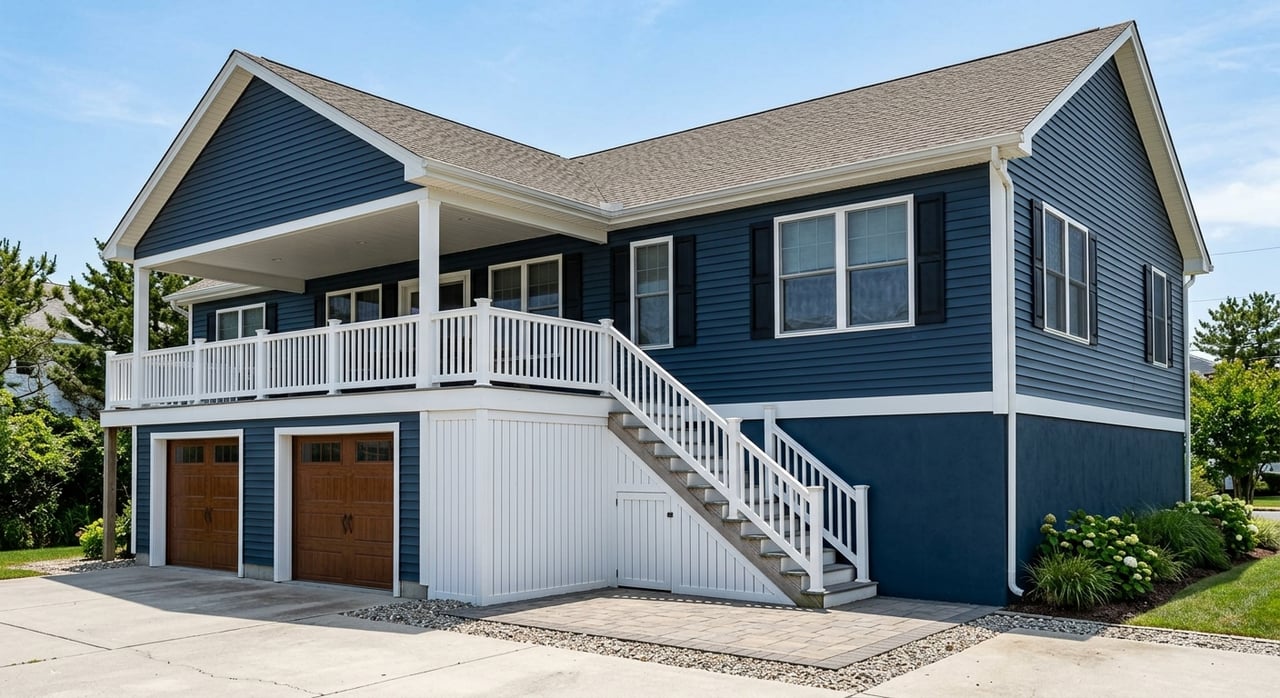
That has real consequences for both cost and property design. As of January 17, 2025, parts of unincorporated Carteret County were mapped into the new Coastal A flood zone, and new construction or substantial improvements must meet V-zone standards. That can include requirements for piers, pilings, columns, breakaway walls, and flood venting.
If you are comparing two similar homes, flood-zone differences alone can change your total cost of ownership. In unincorporated county areas, properties in the National Flood Insurance Program’s CRS Class 9 can also qualify for a 5% flood insurance discount, which is worth noting as you evaluate locations.
Insurance costs go beyond a standard homeowners policy
Many coastal buyers focus on mortgage payment first and insurance second. In Carteret County, it is usually better to reverse that thinking and estimate insurance early.
FEMA explains that flood insurance is required for homes and businesses in high-risk flood areas when there is a government-backed mortgage, and flood policies typically have a 30-day waiting period. That is important if you are trying to line up coverage before closing or before storm season.
You also need to look closely at wind and hail coverage. The North Carolina Department of Insurance guidance cited in the research notes that in coastal areas, windstorm and hail coverage may be excluded from a standard homeowners policy and written separately, often through the NCIUA Coastal Property Insurance Pool, with a separate deductible.
In plain terms, your true insurance budget may include:
- Homeowners insurance
- Flood insurance
- Wind and hail coverage
- Higher deductibles tied to storm exposure
Check zoning and rental rules before you close
A property that looks ideal on paper may not fit your rental plan once you dig into local rules. In Carteret County, short-term rental standards are not uniform from one town to another.
For example, Beaufort’s 2024 codes assessment says the town does not expressly regulate short-term rentals today, but its updated UDO will add new short-term rental rules. The report highlights issues like hosted versus whole-house rentals, parking, noise, lighting, maintenance, and nuisance concerns.
In Atlantic Beach, the planning and inspections department oversees land-use controls, rezoning, zoning interpretation, and code enforcement. That is a reminder that buyers should verify the exact parcel, town, and current rules before assuming a property can be used the way they want.
A few smart checks before closing include:
- Confirm the property’s zoning and any local rental restrictions
- Ask whether future code updates could affect use
- Review parking and occupancy-related standards
- Verify any permit or registration requirements that apply
HOA rules can be stricter than town rules
If you are buying a condo or a home in a planned community, the HOA may affect your use of the property just as much as local government does.
The North Carolina Department of Justice advises buyers to get the bylaws and covenants, read them carefully, and understand fees and approval powers. The state also notes that there is no state or federal agency overseeing HOAs, which makes your own document review especially important.
For second-home and rental buyers, HOA documents can affect:
- Minimum rental terms
- Guest and parking rules
- Amenity access
- Exterior changes and maintenance obligations
- Approval requirements for certain uses or improvements
Even if a town allows a certain rental setup, an HOA may not. That is why review of community documents should happen early, not at the last minute.
Know the tax and compliance costs
Your ownership costs will vary based on the exact location. Carteret County’s countywide property tax rate is $0.34 per $100 of assessed value, according to county tax information. Municipal rates can add to that, and they differ by town.
Examples in the research include:
- Atlantic Beach: $0.1525 for FY2025-26
- Beaufort: $0.2884 proposed for FY2025-26
- Morehead City: $0.3425 for FY2025-26
- Emerald Isle: $0.105 for 2025-26, plus a $0.022 oceanfront beach-nourishment levy in the primary district
If you rent the property, you also need to account for the county’s 6% occupancy tax on lodging receipts, with monthly filings due by the 20th of the following month. That tax comes off the top before you even get to cleaning, utilities, management, insurance, and reserves.
North Carolina’s Vacation Rental Act guidance also matters if you rent for fewer than 90 days. The law requires a written rental agreement spelling out rights, obligations, deposits, and fees.
If you plan to use a manager, there is another compliance item to know. The NC Real Estate Commission bulletin says property managers listed on or after July 1, 2025 must complete human-trafficking awareness training before listing, and employees and contractors must be trained within 60 days. That makes manager selection part of your due diligence, not just a convenience choice.
Build a realistic second-home budget
In Carteret County, the right budget is usually broader than the purchase price and mortgage payment. A better approach is to model the full cost of ownership before you make an offer.
Your worksheet should include:
- Purchase price
- County and municipal property taxes
- HOA dues, if any
- Flood insurance
- Wind and hail coverage
- Occupancy tax if rented
- Cleaning and management costs
- Utilities and internet
- Furnishings and setup costs
- Reserves for storm-related repairs and maintenance
That kind of planning helps you compare properties more clearly. It also helps you avoid buying a home that looks affordable upfront but becomes expensive once insurance, taxes, and rental compliance are added in.
Is Carteret County a smart fit?
For many buyers, yes. Carteret County offers access to a well-known North Carolina coastal market with strong visitor activity, varied price points, and appealing second-home opportunities.
At the same time, this is a location-sensitive market. The difference between Atlantic Beach, Beaufort, Morehead City, and Emerald Isle can be substantial when it comes to purchase price, insurance exposure, taxes, and rental viability. If you want to buy wisely here, the goal is not just finding a home you love. It is finding a property that fits your budget, your use goals, and the rules that apply to that exact address.
If you want help evaluating second-home or rental options in North Carolina, Vicki Lemmond can help you compare markets, think through buyer-side costs, and move forward with more clarity.
FAQs
What makes Carteret County attractive for a second home or rental?
- Carteret County benefits from strong tourism, peak summer demand, major annual events, and a wide range of coastal property options across communities like Atlantic Beach, Beaufort, Morehead City, and Emerald Isle.
How much does a second home cost in Carteret County?
- Countywide, the median home price is $558,500, but local price points vary widely, from roughly $450,000 in Atlantic Beach to about $994,200 in Emerald Isle ZIP 28594, based on the research provided.
What flood issues should buyers know about in Carteret County?
- Flood risk is a major factor because about 33% of the county population and 47% of the land area are in a Special Flood Hazard Area, and some properties may face stricter construction or improvement standards depending on location.
Are short-term rental rules the same across Carteret County?
- No. Short-term rental rules can vary by town, and HOA rules may be more restrictive than local code, so you should verify zoning, community restrictions, and any rental requirements for the exact property before closing.
What extra costs should buyers budget for in Carteret County?
- In addition to the mortgage, you should budget for county and town property taxes, HOA dues, flood insurance, wind and hail coverage, utilities, cleaning, management, occupancy tax if rented, and reserves for maintenance or storm-related repairs.
Does Carteret County charge occupancy tax on rentals?
- Yes. Carteret County levies a 6% occupancy tax on lodging receipts, and monthly filings are due by the 20th of the following month.
Do North Carolina vacation rental laws apply in Carteret County?
- Yes. If the property is rented as a vacation rental for fewer than 90 days, North Carolina’s Vacation Rental Act requires a written rental agreement that explains rights, obligations, deposits, and fees.