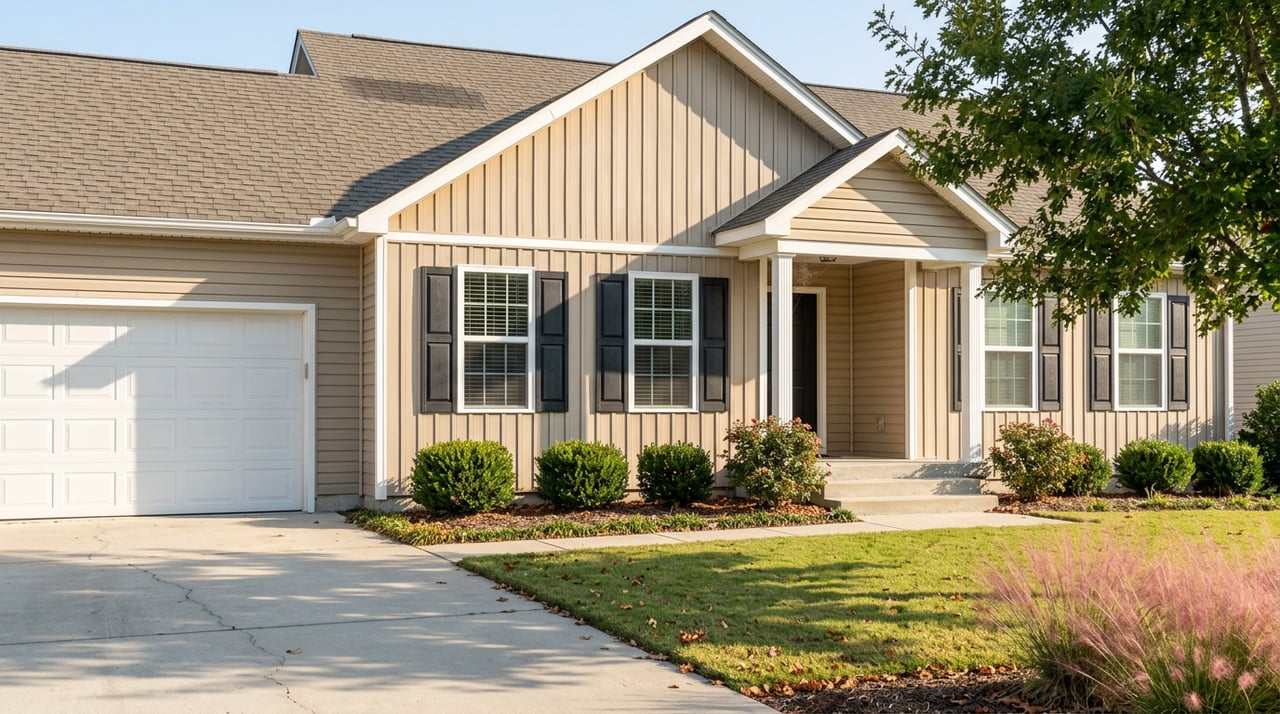
1031 Exchanges in Atlantic Beach for Savvy Investors
What is a 1031 exchange and how does it work for Atlantic Beach investment properties?
A 1031 exchange allows you to sell an investment property in Atlantic Beach, defer the capital gains tax on your profit, and reinvest those proceeds into another qualifying property. Because North Carolina conforms to federal 1031 rules, a properly structured exchange defers both your federal and state capital gains tax at the same time. You must identify a replacement property within 45 days of closing on the sale, complete the purchase within 180 days, and use a qualified intermediary to hold the proceeds throughout the process.
Why Atlantic Beach Makes 1031 Exchanges Worth Understanding
Atlantic Beach sits in one of the most compelling coastal investment markets in Eastern North Carolina. According to Zillow's April 2026 market data, the average home value in Atlantic Beach is approximately $531,239, up 1.6% over the prior year. That moderate, steady appreciation is exactly the kind of market where long-term investors accumulate meaningful equity over time.
And meaningful equity means a meaningful capital gains bill when you eventually sell. That's where the 1031 exchange becomes one of the most powerful tools in your portfolio strategy.
I work with investors across the Crystal Coast who've built real wealth by recycling that equity into larger or better-positioned properties instead of handing a chunk of it to the IRS. Here's what you need to know before you start.
The Core Tax Benefit: Deferral, Not Elimination
Let me be clear about what a 1031 exchange does and doesn't do. It defers your capital gains tax. It doesn't erase it. According to IRS instructions for Form 8824, when you exchange qualifying investment real property solely for like-kind real property, no gain or loss is recognized at the time of the exchange. The gain carries forward into the basis of your replacement property.
That deferred gain eventually becomes taxable when you sell the replacement property without doing another exchange. But many investors continue rolling proceeds from exchange to exchange, and some hold until death, at which point heirs receive a stepped-up basis that can eliminate the deferred gain entirely. That's a long-term planning conversation to have with your CPA, but it illustrates why deferral is so powerful.
What Qualifies as "Like-Kind" on the Crystal Coast
The term "like-kind" is broader than most investors realize. As the IRS Form 8824 instructions explain, real property is like-kind if it is of the same nature or character, even if it differs in grade or quality. In practice, that means your Atlantic Beach single-family rental can be exchanged for a duplex in New Bern, a commercial building in Swansboro, raw land in Carteret County, or even an apartment complex in another state entirely.
According to CPA Validated's 1031 exchange guide, an apartment building, raw land, a commercial building, and a single-family rental can all be like-kind to each other, as long as they meet the investment or business-use requirement. That flexibility gives Crystal Coast investors real options for diversifying their portfolios.
One strategy I see investors use here is exchanging a high-value coastal rental into a multi-unit property inland, reducing their exposure to coastal market risk while still deferring taxes. Because North Carolina conforms to federal 1031 rules, that deferral applies to your state tax bill as well as your federal one.
What Doesn't Qualify
Not every Atlantic Beach property is eligible. The rules are specific, and getting this wrong is costly.
- Personal residences don't qualify. According to IRS Publication 523, a main home is not eligible for like-kind exchange treatment because 1031 applies only to property held for investment or productive use in a business.
- Fix-and-flip properties generally don't qualify. IRS Publication 544 is clear that property held primarily for sale, such as dealer inventory or a flip where the primary intent is resale, is excluded from section 1031 deferral. If you're buying to renovate and resell quickly, document your intent carefully and get qualified tax advice before assuming you can exchange.
- Vacation or second homes with heavy personal use can be a gray area. IRS Publication 523 notes that substantial personal use can jeopardize 1031 eligibility. This is a real consideration for Crystal Coast owners who mix rental income with personal vacation time. The property needs to be held and used primarily as an investment, not as a personal retreat.
- Personal property and intangibles no longer qualify. Per IRS Form 8824 guidance, for 2018 and later years, section 1031 applies only to real property. Equipment, vehicles, and other personal property are out.
If you're unsure whether your Atlantic Beach property qualifies, that's exactly the kind of question to bring to me before you list. The time to sort out eligibility is before you sign a sales contract, not after.
The 1031 Exchange Process: Step by Step for Atlantic Beach Investors
The mechanics matter here. Miss a deadline or handle the money wrong, and the exchange fails. Here's how the process works in practice.
Step 1: Engage a Qualified Intermediary Before You List
This is the step investors most often leave too late. According to The Tax Adviser's 2025 guide to like-kind exchanges, to avoid "constructive receipt" of the sale proceeds, you need a qualified intermediary (QI) in place before closing. If you personally receive or control the cash from the sale, the exchange is invalidated, and the gain becomes taxable that year.
Your attorney or your real estate broker cannot serve as your QI. The intermediary must be an independent third party whose job is to hold the proceeds and facilitate the exchange. Engage one before you list, not after you accept an offer.
Step 2: Close on the Relinquished Property
At closing on your Atlantic Beach property, the sale proceeds go directly to the qualified intermediary, not to your bank account. The 45-day identification clock starts on the day the property transfers. According to the IRS fact sheet on like-kind exchanges, you must identify your replacement property or properties in writing within those 45 days.
Step 3: Identify Replacement Property Within 45 Days
You have 45 calendar days from the sale closing to identify your replacement property in writing. No extensions, no exceptions for weekends or holidays. The identification must be specific and in writing, delivered to your QI or another party in the exchange.
This is where having a local agent who knows the Crystal Coast inventory becomes critical. Forty-five days moves fast, especially in a market where well-priced properties don't sit long. I help my investor clients start scanning replacement options before the relinquished property even closes, so we're not scrambling when the clock starts.
Step 4: Close on the Replacement Property Within 180 Days
The IRS like-kind exchange tax tips page specifies that the exchange must be completed and the replacement property received within 180 days after the sale of the relinquished property, or by the tax return due date including extensions, whichever comes first. That last part matters: if your federal return is due before day 180, filing an extension can preserve your full 180-day window. Coordinate that timing with your CPA.
As noted in CPA Validated's exchange guide, missing either the 45-day or 180-day deadline causes the exchange to fail, and the full gain becomes taxable in that year.
Step 5: Report the Exchange on Form 8824
The IRS fact sheet confirms that you must report the like-kind exchange on Form 8824, which you file with your tax return for the year the exchange occurred. Your CPA handles this, but you need to provide them with the full exchange documentation from your qualified intermediary.
Exchange Milestone | Deadline | Consequence of Missing It |
|---|---|---|
Engage qualified intermediary | Before closing on relinquished property | Exchange invalidated; full gain taxable |
Identify replacement property in writing | Day 45 from relinquished property closing | Exchange fails; full gain taxable that year |
Close on replacement property | Day 180 (or earlier tax return due date) | Exchange fails; full gain taxable that year |
File Form 8824 with IRS | With tax return for exchange year | Reporting failure; potential penalties |
One Long-Term Pitfall to Know About
Some Crystal Coast investors eventually want to convert a rental property they acquired through a 1031 exchange into a personal residence or second home. That's possible, but there's a catch. IRS Publication 523 states that if a property was acquired in a like-kind exchange and later used as a primary home, the standard capital gains exclusion on the eventual home sale may be denied if the home is sold within five years of the 1031 acquisition. Plan that conversion carefully with your tax advisor.
If you're considering buying a second home or rental property on the Crystal Coast, my post on buying a second home or rental in Carteret County covers the acquisition side of that decision in detail. And once you're ready to make an offer, the strategies in making a strong offer on a Carteret County coastal home apply directly to the replacement property purchase in your exchange.
Frequently Asked Questions
Can I sell my Atlantic Beach rental and buy another Crystal Coast property without paying capital gains tax right away?
Yes, if the transaction is structured as a qualifying 1031 exchange. You must use a qualified intermediary to hold the proceeds, identify your replacement property within 45 days of closing, and complete the purchase within 180 days. Because North Carolina conforms to federal 1031 rules, a properly structured exchange defers both your federal and state capital gains tax. The gain isn't eliminated; it carries forward into the replacement property's basis.
What happens if I miss the 45-day identification deadline on my Atlantic Beach 1031 exchange?
The exchange fails entirely, and the full capital gain from your Atlantic Beach sale becomes taxable in the year of the sale. According to The Tax Adviser's 2025 guidance, there are no extensions or exceptions for the 45-day window. This is why I encourage investors to start identifying potential replacement properties before the relinquished property even closes, so the clock doesn't catch you off guard.
Does North Carolina follow federal 1031 rules, or will I owe state tax on a Crystal Coast property swap?
North Carolina conforms to federal like-kind exchange rules under IRC section 1031, according to Start1031's North Carolina state guide. A properly structured exchange defers your North Carolina state capital gains tax along with your federal tax. Keep in mind that local property taxes, transfer fees, and closing costs still apply at the time of the transaction; those are not deferred by the 1031 exchange itself.
Can I exchange my Atlantic Beach condo into an out-of-state commercial building and still defer taxes?
Yes. The IRS Form 8824 instructions confirm that almost any U.S. investment real property is like-kind to any other U.S. investment real property, regardless of property type or location. Your Atlantic Beach condo rental can be exchanged for a commercial building in another state, raw land, a multi-family property, or any other qualifying investment real estate. The key requirement is that both properties must be held for investment or business use, not primarily for personal use or sale.
Are short-term rentals and Airbnb properties in Atlantic Beach eligible for 1031 exchange treatment?
They can be, but the personal-use rules matter. IRS Publication 523 notes that substantial personal use can jeopardize 1031 eligibility, and a property held primarily for personal enjoyment rather than investment won't qualify. A short-term rental that is genuinely operated as an investment business, with limited personal use and proper documentation, can qualify. This is a nuanced area where I strongly recommend working with a CPA who knows North Carolina real estate taxation before assuming your Airbnb property is exchange-eligible.
Do I need a qualified intermediary in North Carolina, or can my attorney or broker hold the sale proceeds?
You need an independent qualified intermediary. According to The Tax Adviser, personally receiving or controlling cash typically invalidates the exchange under the constructive receipt rules. Your real estate attorney and your broker are generally disqualified from serving as your QI because of their existing relationship with you in the transaction. Engage an independent QI before you sign the sales contract on your relinquished property.
The 1031 exchange is one of the most effective tax-deferral tools available to real estate investors, and Atlantic Beach's stable, appreciating market makes it a strong candidate for long-term exchange strategies. The process has real deadlines and real consequences for missteps, so getting the right team in place before you list is everything.
If you're thinking about selling an investment property on the Crystal Coast or identifying a replacement, I'd love to walk through the numbers with you. Email me directly to talk through your situation, or search current Crystal Coast listings to start thinking about replacement property options.
Equal Housing Opportunity. Vicki Lemmond, NC License #226908, REAL Broker LLC, regulated by the NC Real Estate Commission. This article is provided for general informational purposes only and does not constitute legal, tax, or financial advice. 1031 exchange rules are complex and fact-specific; confirm your own situation with a qualified CPA, tax attorney, and closing professional before proceeding.