Emerald Isle waterfront homes offer oceanfront and sound-front options along North Carolina's Crystal Coast, drawing second-home buyers and investors with uncrowded beaches, boating access, and strong vacation rental demand. Flood zone designations, CAMA coastal permits, and North Carolina's attorney-closing process are key factors every buyer should understand before making an offer.
Why are buyers drawn to waterfront homes in Emerald Isle, NC?
Emerald Isle waterfront homes attract second-home buyers and investors because they sit on one of the least-crowded stretches of the North Carolina coast, offering direct beach or sound access, strong vacation rental potential, and a lifestyle that's hard to replicate anywhere else on the Crystal Coast. Understanding the flood, permit, and closing requirements specific to coastal Carteret County is what separates a confident purchase from a costly surprise.
What Makes Emerald Isle Different from Other Coastal Markets
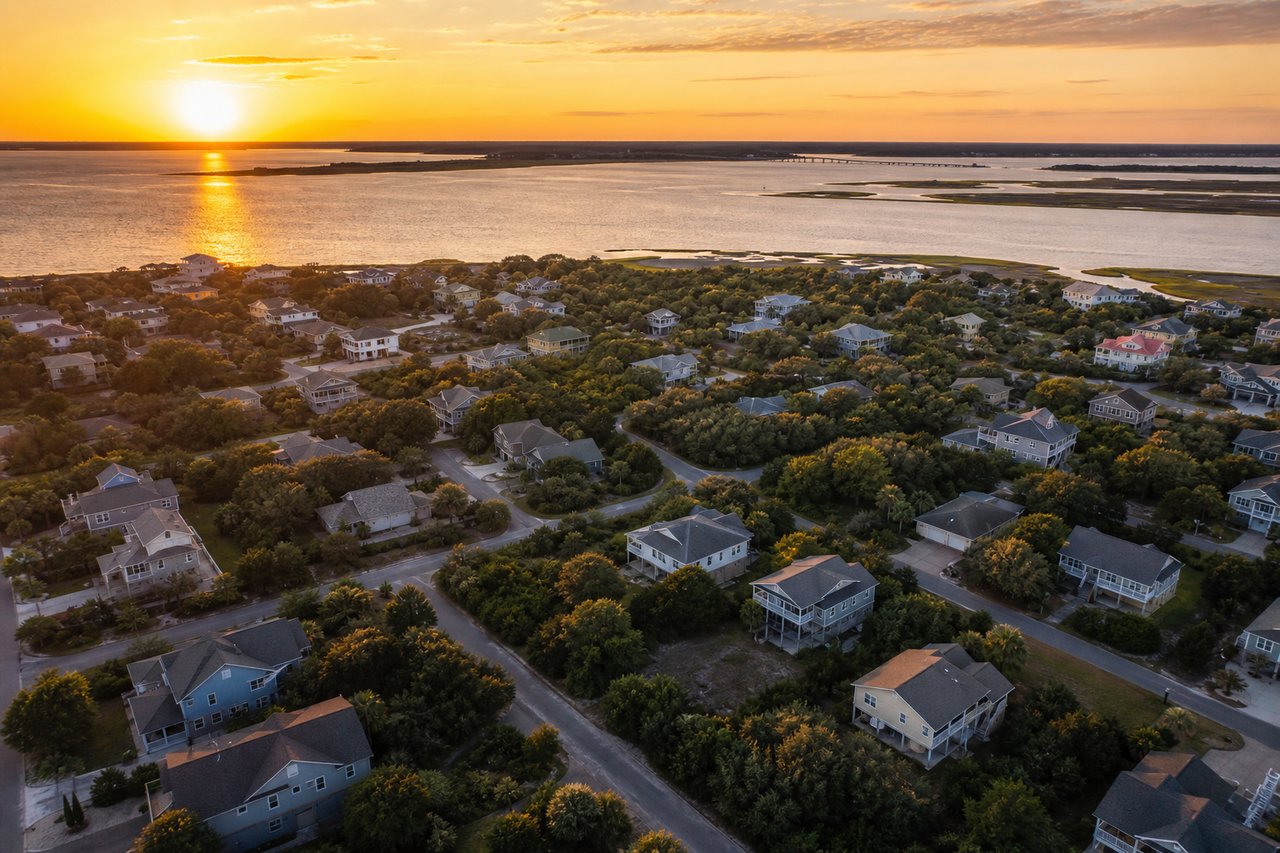
Emerald Isle sits on Bogue Banks, a barrier island in Carteret County that faces the Atlantic Ocean to the south and Bogue Sound to the north. That geography gives buyers two completely different waterfront experiences on the same island, and it's one of the first things I talk through with every client who contacts me about this market.
The permanent population tells the real story. According to the U.S. Census Bureau's 2020 Decennial Census, Emerald Isle had just 3,847 year-round residents, yet the same data count 3,505 total housing units. That ratio means the vast majority of homes here are second homes or vacation rentals, not primary residences. The island is built for seasonal living, and that shapes everything from how the market prices properties to how rental income projections work.
The broader region backs this up. Crystal Coast Tourism Authority data show that visitor spending in Carteret County exceeded $570 million in calendar year 2023, the latest annual tourism figure available as of August 2026. That level of visitor demand is what makes Emerald Isle waterfront homes so appealing to buyers who want a property that earns while they're not using it.
Oceanfront vs. Sound-Front: Two Very Different Purchases
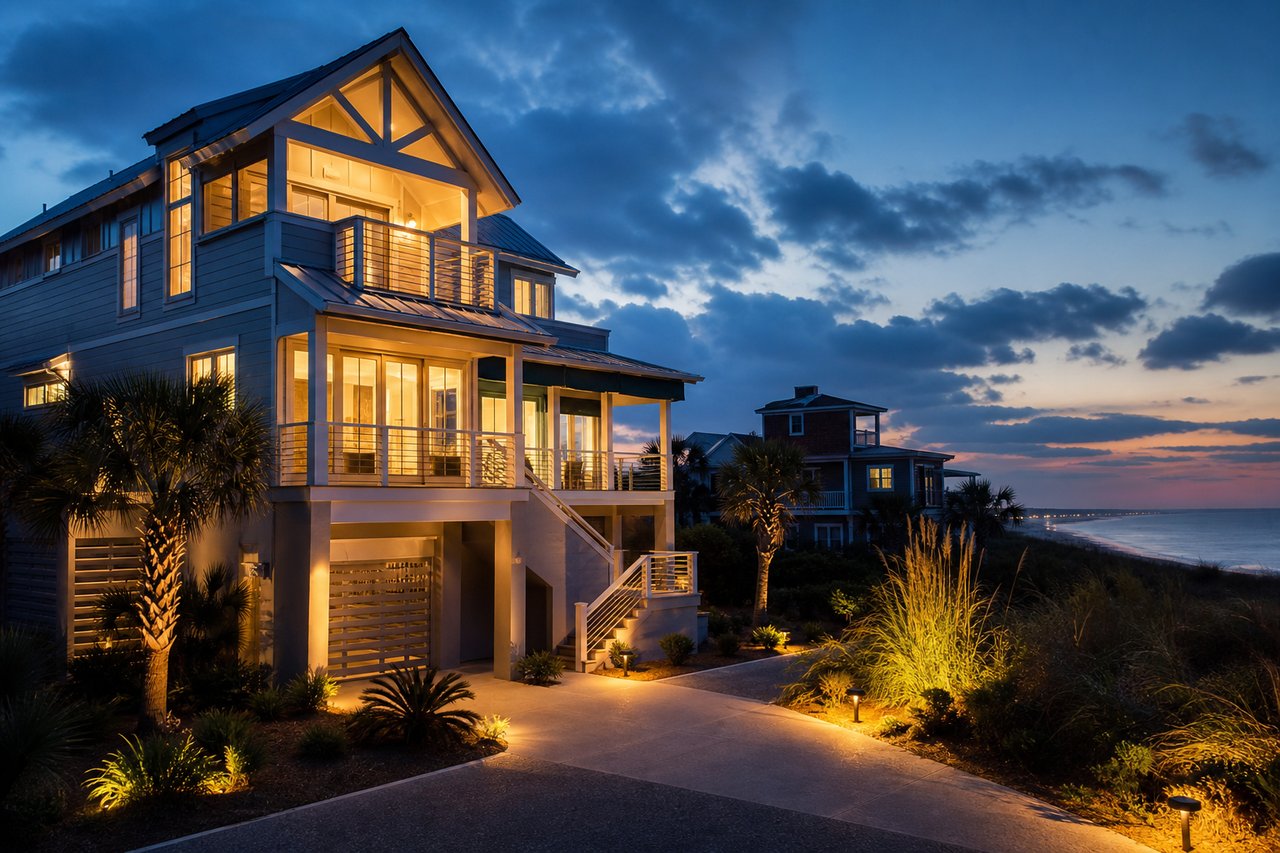
Oceanfront homes on the south side of the island give you direct Atlantic access, sunrise views, and the kind of beach experience that fills a rental calendar fast. Sound-front homes on the north side face Bogue Sound, offering calmer water, dock potential, and excellent conditions for kayaking, paddle-boarding, and boating. The Crystal Coast Tourism Authority highlights exactly these activities as core draws for the region.
The two property types carry different regulatory profiles as well. Oceanfront parcels are subject to North Carolina Division of Coastal Management oceanfront setback requirements tied to shoreline erosion rates, which can directly affect what you can build or renovate on the lot. Sound-front and estuarine shoreline properties face their own CAMA rules around docks, bulkheads, and wetland buffers. Neither is a dealbreaker, but both require due diligence before you close.
Property Type | Primary Appeal | Key Regulatory Consideration |
Oceanfront | Atlantic beach access, rental demand, sunrise views | CAMA oceanfront setbacks, VE/AE flood zones, erosion rates |
Sound-Front / Intracoastal | Calm water, dock access, boating and paddling | CAMA estuarine shoreline rules, dock/bulkhead permits, AE flood zones |
Canal / Second Row | Lower entry price, water access via canal | Canal easements, deed restrictions, flood zone verification |
The Regulatory and Insurance Reality of Buying Coastal
I'll be honest with every buyer who asks me about Emerald Isle waterfront: the lifestyle is exceptional, and the regulatory picture is more layered than a typical residential purchase. Getting clear on these items during due diligence is what protects your investment.
Flood Zones and Insurance
Large portions of Emerald Isle's oceanfront and sound-side waterfront fall within FEMA Special Flood Hazard Areas. Carteret County's floodplain management maps show AE and VE zones along both the ocean and sound shorelines. VE zones, which cover oceanfront areas subject to wave action, carry the most stringent building requirements and the highest flood insurance costs.
If you're financing your purchase with a federally related mortgage and the property sits in an SFHA, flood insurance isn't optional. FEMA's mandatory purchase guidelines require lenders to obtain flood insurance as a condition of the loan. Even if you're paying cash, skipping flood coverage on a coastal barrier island property is a risk I'd strongly advise against. The FEMA Flood Map Service Center lets you pull the official flood map for any specific parcel before you make an offer.
My post on inspections and insurance for Carteret County coastal buyers goes deeper on what to expect from the insurance side of a coastal purchase.
CAMA Permits and Coastal Development Rules
North Carolina's Coastal Area Management Act (CAMA) regulates development in Areas of Environmental Concern, which includes oceanfront shorelines, estuarine shorelines, and coastal wetlands. The NC Division of Coastal Management administers this program, and waterfront property owners in Emerald Isle need CAMA permits for many activities beyond just new construction, including building or modifying piers, docks, bulkheads, and certain structures near the shoreline.
Minor and major permit thresholds depend on the scope of the activity. If you're buying a property with an existing dock or planning to add one, verifying the permit status of those structures during due diligence is essential. I walk every waterfront buyer I work with through exactly this checklist before we get to closing.
How Closing Works in North Carolina
North Carolina is an attorney-closing state. Per North Carolina State Bar guidance, a licensed NC real estate attorney oversees title search, deed preparation, and fund disbursement at closing. This is different from the escrow-company model used in some other states, and it's worth knowing upfront so you're not surprised by the process.
Your purchase will also involve the North Carolina excise tax on conveyances governed by NC General Statutes §105-228.28 and collected by the Carteret County Register of Deeds at recording. The statutory rate is $1.00 per $500 of consideration. Who pays this tax in a given transaction is negotiable between buyer and seller in the contract, and customs vary, so confirm the allocation in your specific offer rather than assuming one side covers it.
The full purchase process for an Emerald Isle waterfront home typically includes working with a North Carolina Real Estate Commission-licensed broker, ordering a survey, reviewing CAMA designations, checking flood maps, verifying dock permits and easements, and coordinating with your NC real estate attorney for closing. That's a longer checklist than a typical inland purchase, and having someone who knows this market handle it makes a real difference.
For a closer look at how to position your offer competitively in this market, see my guide on making a strong offer on a Carteret County coastal home.
The Lifestyle and Investment Case for Emerald Isle Waterfront
Beyond the regulatory checklist, Emerald Isle delivers a lifestyle that keeps buyers coming back. The Crystal Coast Tourism Authority markets the region on uncrowded beaches, world-class fishing, boating, and scenic waterways, and those aren't just marketing claims. This is genuinely one of the least-developed barrier islands on the East Coast, and the low density is a big part of what draws buyers who are tired of the crowds at more commercialized beach towns.
From Emerald Isle, you're also within easy reach of Cape Lookout National Seashore, the historic Beaufort waterfront, and Bogue Inlet Fishing Pier, all of which add to the lifestyle draw for second-home owners and their guests.
On the investment side, the second-home character of the market is a feature, not a quirk. With only 3,847 permanent residents and 3,505 housing units per the U.S. Census Bureau, the inventory of available properties is inherently limited. Limited supply combined with strong visitor demand, as evidenced by that $570 million in county visitor spending, creates the kind of market dynamics that reward buyers who move decisively and price their properties correctly.
North Carolina law requires real property to be assessed at its true value in money as of the county's most recent general reappraisal, per NC General Statutes Chapter 105, Article 11. For waterfront properties, that means appraisers consider view, water access, and location, which is why two homes on the same street can carry very different assessed values depending on their specific position relative to the water.
Every waterfront purchase in Emerald Isle is different. Your specific situation, whether you're buying for personal use, rental income, or both, will shape which property type, which location, and which due-diligence priorities matter most. That's the conversation I have with every buyer before we start touring properties.
Frequently Asked Questions About Emerald Isle Waterfront Homes
What's the difference between oceanfront and sound-front homes in Emerald Isle?
Oceanfront homes face the Atlantic Ocean on the south side of Bogue Banks and offer direct beach access, strong rental demand, and sunrise views, but they sit in higher-risk VE and AE flood zones and are subject to CAMA oceanfront setback requirements tied to erosion rates. Sound-front homes face Bogue Sound on the north side, offering calmer water, dock and boating access, and typically different flood zone designations. Both types require CAMA permit review during due diligence, but the specific rules differ based on shoreline type.
How risky is flooding for Emerald Isle waterfront homes, and what insurance do I need?
Large portions of Emerald Isle's waterfront fall within FEMA Special Flood Hazard Areas, including AE and VE zones shown on FEMA's Flood Map Service Center. If you're financing with a federally related mortgage and the property is in an SFHA, flood insurance is required by law under FEMA's mandatory purchase guidelines. Even cash buyers should budget for flood coverage, and reviewing the specific flood zone designation for any parcel you're considering is a critical due-diligence step.
Are Emerald Isle waterfront homes good for short-term rentals or vacation rentals?
The market strongly supports vacation rental use. Carteret County recorded more than $570 million in visitor spending in 2023, per the Crystal Coast Tourism Authority, and Emerald Isle's low permanent population relative to housing stock reflects how many properties here operate as vacation rentals. That said, rental performance varies by property type, location, and condition, and local ordinance details should be verified before purchase. I can walk you through a rental income analysis as part of your property evaluation.
What permits do I need to build a dock or renovate a beachfront home in Emerald Isle?
Most dock construction, bulkhead work, and significant oceanfront or estuarine shoreline improvements require a CAMA permit from the NC Division of Coastal Management. Minor and major permit thresholds depend on the scope of the activity. Oceanfront renovations must also comply with setback requirements based on the area's shoreline erosion rate. Verifying existing permit status for any dock, pier, or shoreline structure on a property you're buying is an essential due-diligence item.
Is Emerald Isle mainly full-time residents or second-home owners?
Overwhelmingly second-home owners. The U.S. Census Bureau's 2020 Decennial Census counted 3,847 permanent residents and 3,505 total housing units in Emerald Isle, a ratio that reflects a market built around seasonal and vacation use. This character shapes everything from how the market prices waterfront properties to the rental income potential buyers can realistically expect.
Ready to Explore Emerald Isle Waterfront Properties?
Emerald Isle offers a rare combination of uncrowded coastline, genuine waterfront lifestyle, and a second-home market with real depth. Getting there confidently means understanding the flood zones, the CAMA permit landscape, and how North Carolina's closing process works before you make an offer.
I've helped buyers navigate every step of this process, and I know this market in detail. If you're ready to start the conversation, send me an email and let's talk through what you're looking for. Or browse current Crystal Coast listings at buyingnc.com.
About Vicki Lemmond
Vicki Lemmond is an experienced real estate professional serving Eastern and Coastal North Carolina, including Emerald Isle, Swansboro, New Bern, Goldsboro, and Kinston. Whether you're a first-time homebuyer, selling a property, or building an investment portfolio, Vicki delivers results-driven guidance backed by deep local knowledge and personal investment experience across short-term, mid-term, and long-term rental properties. NC License #226908.
Lemmond Real Estate Group
Equal Housing Opportunity. Vicki Lemmond, NC License #226908, Lemmond Real Estate Group, affiliated with REAL Broker LLC, regulated by the NC Real Estate Commission. This article is general information only and does not constitute legal, tax, or financial advice. Confirm your specific costs, tax obligations, and contract terms with your attorney, tax advisor, lender, or closing officer.